Many students begin exploring career options soon after completing school. One field that often attracts attention is the Merchant Navy. It offers the opportunity to work on ships, travel internationally, and participate in global trade operations.
In recent years, interest in maritime careers has been growing in India. As international trade expands, the shipping industry continues to require trained professionals who can operate and manage commercial vessels.
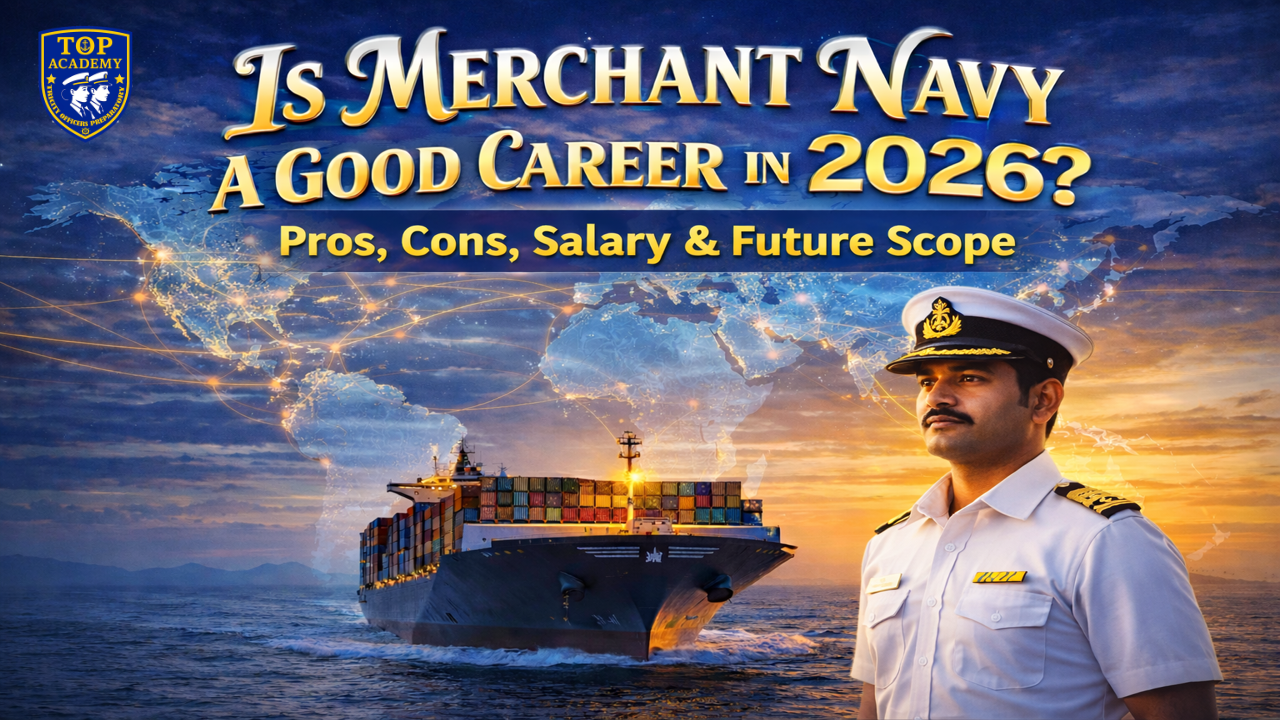
This article explains an important question many students ask: Is Merchant Navy a good career in 2026? It explores the career scope, salary expectations, advantages, and challenges of working in this field. The goal is to help students understand the profession before making a career decision.
The Merchant Navy career attracts many students because it offers a unique working environment compared to traditional professions.
One reason is the opportunity to travel internationally. Merchant ships operate across global trade routes, which means professionals may visit several countries during their assignments.
Another reason is the structured career progression. The maritime industry follows a clear promotion system based on training, certification, and sea experience.
Students are also attracted to the technical and practical nature of the work. Instead of working only in offices, maritime professionals operate ships, engines, and advanced navigation systems.
For students who enjoy technology, engineering, and travel, this career path can be appealing.
The merchant navy career scope continues to remain relevant because global shipping is essential for international trade. As economies grow and demand for goods increases, the shipping industry also expands.
New shipping routes, larger cargo vessels, and modern maritime technology have created continued demand for trained maritime professionals.
Many countries rely on international shipping companies to transport goods efficiently. This means trained officers, engineers, and crew members remain necessary.
The demand for maritime professionals is influenced by several factors.
First, shipping companies regularly expand their fleets to meet trade demands. Each vessel requires trained officers and crew members to operate safely.
Second, the global maritime workforce includes professionals from many countries. As experienced officers retire, new trained candidates are required to replace them.
Third, India has developed several maritime training institutions and has become an important contributor to the global maritime workforce.
Global career opportunities
The maritime industry operates internationally. Professionals often work with shipping companies from different countries and travel across global ports.
Competitive salary structure
The merchant navy salary in India is often higher than many entry-level careers. Even junior positions may offer attractive compensation compared to typical graduate jobs.
Travel opportunities
Working on ships allows professionals to visit multiple countries through shipping routes. This international exposure is one reason many students explore this career.
Structured promotions
The maritime industry follows a structured hierarchy. Professionals progress from trainee roles to senior officer positions based on experience and certifications.
For example, a deck cadet can eventually become a captain after gaining sufficient sea experience and passing certification exams.
Professional maritime training
Maritime courses provide specialized training in navigation, marine engineering, ship operations, and safety procedures. These skills are valuable in the global shipping industry.
While the profession offers several benefits, it also comes with challenges.
Long periods away from home
Merchant Navy professionals often spend several months at sea. During this time they remain away from family and friends.
Physically demanding work
Working on ships may involve physical tasks and long working hours. Conditions can sometimes be challenging depending on weather and sea conditions.
Life at sea can be challenging
Living on a ship requires adjusting to a confined environment for extended periods. Crew members must maintain discipline and teamwork to ensure smooth operations.
Strict discipline and safety regulations
Ships operate under strict safety standards. Officers and crew members must follow detailed procedures to prevent accidents and ensure safe navigation.
Limited communication while onboard
Although communication technology has improved, internet access and communication with family may still be limited during long voyages.
Understanding these challenges is important before choosing a maritime career.
The merchant navy career may suit students who enjoy technical and practical fields.
Students interested in engineering, navigation, or logistics may find maritime careers engaging.
Those who are comfortable traveling internationally and spending time at sea may also adapt well to the profession.
Students who prefer hands-on work environments rather than traditional office jobs often find this career appealing.
Some students may find maritime careers less suitable depending on their preferences.
Students who prefer stable office-based jobs may find the lifestyle difficult.
Those who want to remain close to family or avoid long travel periods may also find the profession challenging.
Life at sea requires adjustment and discipline, so students should carefully consider these factors before choosing this career path.
Students interested in Merchant Navy usually begin by selecting a suitable maritime course.
Common courses include nautical science, marine engineering, and GP rating programs.
The next step is preparing for entrance exams required by maritime institutes. These exams often test mathematics, physics, English, and reasoning ability.
Finally, students must choose a recognized maritime training institute where they can complete academic training and sea experience.
Students planning a Merchant Navy often need guidance about courses, entrance exams, and eligibility requirements. Preparing for exams like IMU CET usually requires a good understanding of subjects such as physics, mathematics, and reasoning.
For students looking for Merchant Navy coaching in Mohali, Punjab, TOP Academy provides support with entrance exam preparation and guidance on different merchant navy courses. Students can also get information about eligibility, admission steps, and the process of joining a merchant navy training institute.
Choosing the right career after school requires careful research Merchant Navy can be a rewarding option for students interested in maritime work and global trade.
It offers opportunities for international exposure and career growth. At the same time, the profession requires discipline, proper training, and the ability to adapt to life at sea.
Students should understand the career path, responsibilities, and lifestyle involved before making a decision about joining the Merchant Navy.
OUR MORE BLOG :
How to Join Merchant Navy After 12th: Step-by-Step Career Guide
Psychometric Test for Merchant Navy: Latest Questions, Pattern, Syllabus & Interview Tips
BEST MERCHANT NAVY COACHING IN ZIRAKPUR PUNJAB: Launch Your Sea Adventure
IMUCET Application Form 2026 – Complete Guide (Step-by-Step Process)